

Introduction to wedding photographer and videographer in Bristol: Choosing the Right Wedding Film and Photos in Bristol
Your wedding day will be over in the blink of an eye. The photographs and film you keep are the closest thing to reliving it, which is why the professionals you choose to capture it matter more than most couples initially realise.
Most couples planning a wedding in Bristol want both photography and videography as part of their coverage. The joy of flipping through a beautifully printed album is one thing; watching a wedding film that makes you feel you’re back in the moment is another entirely. Together, they create a complete picture of your day.
But once you’ve decided you want both, a second question quickly follows: should you book a combined wedding photography and videography team in Bristol, or hire two separate specialists independently?
It’s a genuinely important decision, and the answer isn’t the same for every couple. This guide walks through both options in full, helping you weigh up the practical realities of each before you commit. Whether you’re searching for a wedding photographer and videographer in Bristol as a package, or considering keeping your wedding film and photos in Bristol with two separate creatives, understanding the trade-offs will help you make the right call.
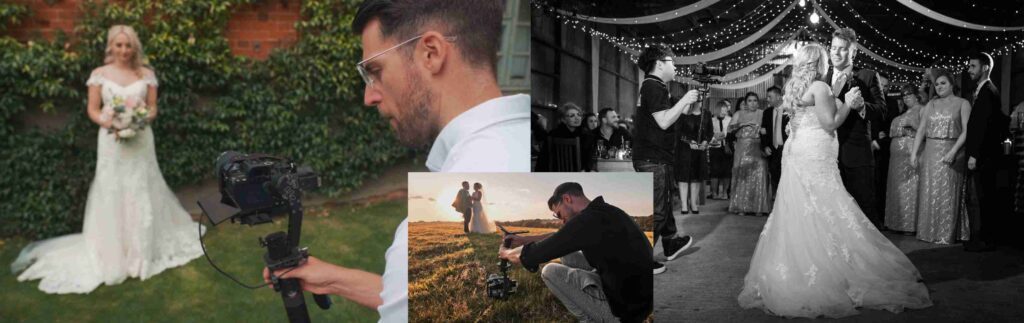
Why This Decision Matters More Than You Think
The choice between one team and two affects far more than just your invoice total. It shapes how your day flows, how the final images and footage feel, and how much mental energy you spend on coordination in the months before your wedding.
Impact on Your Wedding Day Timeline
A wedding day timeline is a carefully balanced structure. Preparation, portraits, ceremony, reception, each segment has its own demands, and the professionals working alongside you need to be in sync with the schedule and with each other.
During bridal prep, a photographer and a videographer will often be working in the same room simultaneously. If they haven’t worked together before, they can unintentionally disrupt each other’s framing, move items that the other person has set up, or create awkward pauses while they negotiate positioning. When they’re part of the same team, that choreography happens naturally and in advance.
Portrait sessions during golden hour are particularly time-sensitive.
There’s often a narrow window sometimes as little as 20 minutes, to capture the couple in the best available light. A combined wedding coverage Bristol team will have planned this together. Two separate suppliers who haven’t previously collaborated may spend some of that precious window working out who’s shooting from where.
During the ceremony, the stakes are even higher. Vows, rings, the first kiss, these moments happen once. Clear communication and pre-agreed positioning mean both photographer and videographer can capture everything without stepping on each other. Combined wedding coverage in Bristol means this has been planned as a unified approach from the start.
Impact on Lighting and Style Consistency
Photography and videography are two different crafts with different technical needs. A photographer may use flash or off-camera strobe; a videographer needs consistent, continuous light. These requirements can conflict if not planned around carefully.
Beyond the technical side, there’s the question of visual tone. Do you want your images and footage to feel like they belong together a coherent body of work that tells the same story in two formats? Or are you comfortable with them having a different aesthetic entirely? A photography and videography bundle in Bristol from a single studio means the editing approach, colour palette, and overall mood will be intentionally aligned. When couples book separate teams, that cohesion can still happen, but it requires both parties to actively discuss and agree on a shared visual direction.
Impact on Ceremony Positioning
Most Bristol ceremony venues, whether a church, a licensed barn, or a city-centre hotel, will have restrictions on where photographers and videographers can stand. Some allow movement during the ceremony; others require everyone to stay in a fixed position from the moment the processional begins.
When a photographer and videographer haven’t coordinated their positioning in advance, the result can be mutual obstruction. The videographer’s camera on a tripod blocks the photographer’s sightline. The photographer moves for a specific shot and inadvertently steps into the video frame. These aren’t rare occurrences; they happen regularly when photo-video coordination on the wedding day hasn’t been established clearly beforehand.
A combined team will have a single approach to ceremony coverage, with positioning agreed between colleagues rather than negotiated on the morning of the wedding.
Impact on Stress Levels
Wedding planning involves a substantial amount of supplier communication. Adding two separate photography and videography teams to your list means two separate planning calls, two sets of contracts, two different question-and-answer processes, and two separate timelines to reconcile into a single wedding day schedule.
There’s also the matter of repeated moments. During bridal prep, a wedding videographer may want to capture the bride having her veil put on. So might the photographer. If they’re not communicating, the answer is sometimes to repeat the moment twice once for each. This is both intrusive and time-consuming.
For couples who want a smooth, low-friction experience, managing one supplier relationship rather than two is a meaningful reduction in planning load.
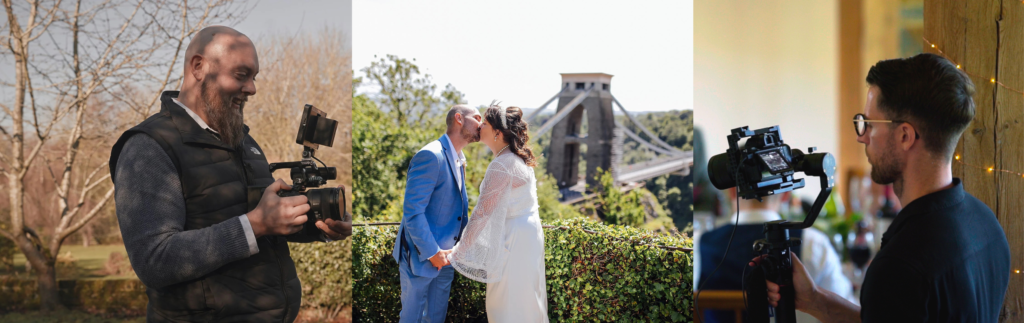
Option 1: Hiring a Combined Wedding Photography and Videography Team in Bristol
A combined photography and videography team in Bristol typically consists of a lead photographer and a lead videographer who work together regularly either as a duo or as part of the same studio. They know each other’s working style, communicate naturally, and have developed a shared approach to covering a wedding day.
What a Photography and Videography Bundle in Bristol Typically Includes
When you book a photography and videography bundle in Bristol through a single studio or established duo, you can generally expect the following:
- Shared pre-wedding planning: One or two planning conversations that cover the timeline, locations, key moments, and logistics for both photo and video coverage together.
- Unified coverage: Both photographer and videographer will have discussed their positions, priorities, and approaches as a team before arriving on the day.
- Coordinated timeline: Portrait time, ceremony positioning, and reception coverage are all planned around the needs of both media formats simultaneously.
- Consistent editing: The visual tone of your photographs and film will be aligned, giving your overall wedding media a coherent look and feel.
Benefits of a Single Supplier Wedding Media Team
The advantages of booking through a single supplier go beyond convenience:
- Seamless communication: Every detail from the first planning email to the final delivery goes through one point of contact. There’s no risk of information being shared with one team but not the other.
- One contract: Simpler paperwork, one set of terms, and a single deposit structure. This also means clearer accountability if anything needs to be resolved.
- Cohesive storytelling: When both photographer and videographer have discussed the day together in advance, the resulting images and film tend to complement each other in a way that’s difficult to achieve by chance.
- Cost clarity: Bundled pricing is typically clearer to budget for than two separate quotes, and in many cases offers better overall value.
Potential Limitations to Consider
No option is without its limitations. With a combined team, the primary trade-off is creative range. If both photography and videography come from the same studio, the styles will be closely aligned by design which is excellent if you love that aesthetic, but limiting if you want a more eclectic mix of a documentary-style photographer paired with a cinematic videographer.
Availability can also be a factor. A well-established combined team books out early, particularly for peak Bristol wedding season dates from May through September. If you’re planning your wedding with shorter lead time, your options among combined teams may be more limited than if you were booking individual suppliers separately.
Option 2: Hiring Separate Photography and Videography Teams
The alternative is to approach photography and videography as two independent bookings. You choose the photographer whose work you love, then separately find a videographer whose style you admire without those two being part of the same studio or regular working relationship.
Why Some Couples Prefer Separate Specialists
For couples with a very specific creative vision, hiring independently gives them the freedom to choose the best individual in each discipline. You might be drawn to a particular photographer for their candid, photojournalistic approach to storytelling, while also wanting a videographer known for producing highly cinematic, scored wedding films. That combination might not exist within a single studio.
Some couples also simply find their photographer first and then later realise they’d like video coverage added. In that case, finding a separate videographer is the natural path, particularly if the photographer doesn’t work with a regular video partner.
Benefits of Hiring Two Teams
The clearest benefit is creative flexibility. With no stylistic constraint between the two bookings, you can curate a combination that reflects exactly what you want. Two dedicated specialists, each focused entirely on their own medium, can sometimes produce exceptional individual results.
There’s also a practical argument……. if your favourite photographer is fully booked but still available, or vice versa, booking independently means one outstanding result rather than having to compromise the whole package.
Risks Without Proper Coordination
These benefits only hold if both teams actively coordinate. Without that, a range of practical problems can surface on the day:
- Blocking shots: A videographer’s tripod or steadicam operator can step directly into a photographer’s framing during ceremony moments, and neither party may realise it until the footage is reviewed.
- Lighting clashes: Strobe flash from a camera affects video exposure. Continuous video lighting can overpower or conflict with the ambient light a photographer is working with. Without a pre-agreed approach, both suffer.
- Audio interference: A videographer may have a lapel mic on the groom and a recorder near the celebrant. If the photographer doesn’t know this, camera sounds, movements, and conversations can end up on the audio track of the wedding film.
- Timeline delays: Without a single coordinated timeline, separate teams may have conflicting expectations about how long portraits will take, when speeches begin, or who has priority in any given moment. This creates friction that slows the day down.
The good news is that experienced professionals are aware of these risks and know how to avoid them provided they’ve been introduced to each other beforehand and given the opportunity to coordinate. The burden of making that happen, however, falls to the couple.
Real Wedding Day Scenarios in Bristol
Theory is useful, but concrete examples bring the decision to life. Here are three common scenarios Bristol couples face, and how the choice between one team or two plays out in practice.
Compact Ceremony Venues
Many popular Bristol wedding venues, converted warehouses, intimate barn spaces, historic chapels have tight aisles and limited areas where photographers and videographers can stand without being obvious. When two separate teams haven’t planned their positions in advance, they often end up competing for the same vantage points, or worse, inadvertently walking into each other’s shots during the processional.
A combined team will have mapped this out beforehand. One will take the aisle angle; one will hold a wide shot from the back. The result is comprehensive coverage with no duplication and no obstruction.
Golden Hour Portraits
Golden hour the 30 to 40 minutes before sunset when natural light is at its warmest and most flattering is highly coveted by both photographers and videographers. It’s also finite. A combined team will have built the portrait session into the timeline together, knowing exactly how long they need and how to make use of the light without either medium feeling rushed.
When two separate teams are working, there can be a tug-of-war for the couple’s attention. The photographer wants to try a different location; the videographer needs a longer take of a walking shot. Without pre-coordination, golden hour ends before either feels they’ve finished.
Speeches and First Dance Coverage
Speeches and the first dance present a different challenge: audio. A videographer’s recording relies on capturing clean sound which means anyone with a shutter-clicking camera standing close to an open microphone can inadvertently appear on the final film’s audio track. Similarly, a first dance in a darkened room may prompt the photographer to use flash, which can cause exposure problems for the video if not anticipated.
Combined teams manage these technical considerations as a matter of routine. Two separate teams need to have explicitly discussed them in a pre-wedding call to avoid issues on the night.
How to Decide What’s Right for Your Wedding
Both approaches can produce beautiful results. The right choice depends on your priorities, your working style, and the specific creative outcome you’re hoping for.
A Combined Wedding Coverage Bristol Team May Suit You If:
- You value simplicity in your planning process and want to deal with one team rather than two.
- You prefer cohesive visuals photographs and film that feel like part of the same creative project rather than two separate bodies of work.
- You want structured coordination from the start, with both photographer and videographer working from the same plan on the day.
- Your venue has space restrictions that require careful positioning of multiple camera operators.
- You’re working with a tight timeline and can’t afford for coordination issues to eat into your portrait session or key moments.
Separate Teams May Suit You If:
- You have a very specific creative vision that requires distinct styles for photography and videography and you’ve found individual specialists whose work matches each.
- You’re comfortable managing logistics and are prepared to facilitate an introduction and planning call between both teams before the wedding.
- You already have a photographer booked and are adding video coverage later, with no combined team option available.
- Both your chosen specialists have confirmed they have experience working alongside other wedding media professionals and are open to pre-wedding coordination.
Questions to Ask Before Booking a Wedding Photographer and Videographer in Bristol
Have you worked together before?
If booking a combined team, this should be a given. If booking separately, understanding whether your two chosen professionals have an existing working relationship is important.
How do you coordinate ceremony positioning?
Listen for a specific, practical answer. Experienced teams will have a clear protocol. Vague answers suggest limited thought has gone into this.
Who leads during portrait sessions?
In well-run combined teams, this is defined in advance. When booking separately, it’s a question both suppliers need to have answered before arriving at your venue.
How do you manage audio and lighting conflicts?
Flash use during speeches, camera shutter noise near microphones, and continuous lighting during the first dance, any experienced team will have worked through these scenarios many times.
What is your backup plan?
Equipment fails. What happens if a camera goes down mid-ceremony? What if a team member is ill? A reputable combined team will have a clear contingency plan; separate bookings mean two separate contingencies to understand.
The Bristol Photographic Approach
At The Bristol Photographic, we work as a combined wedding photography and videography team. Every couple we work with gets the benefit of a single, coordinated creative partnership not two independent professionals meeting for the first time at the church.
Our approach centres on four things:
- Structured pre-wedding planning: We sit down (in person or over video) with every couple before their wedding to map the day in full. Timeline, locations, key moments, venue logistics all of it covered once, together.
- Calm, coordinated coverage: On the day itself, our team works quietly and efficiently without drawing attention. We know each other’s rhythms and we don’t need to negotiate positioning mid-ceremony.
- Unified storytelling: Your photographs and film are edited with a consistent visual language. The colour, the mood, the tone they belong together because they’ve been created together.
- Flexible timeline management: Weddings rarely run perfectly to schedule. Our combined approach means we adapt as a team, never leaving one medium behind when the day shifts.
We provide combined wedding coverage across Bristol and the surrounding area, working at venues from Clifton to the Cotswolds and beyond. If you’re looking for a wedding photographer and videographer in Bristol who approach the day as a single, cohesive team, we’d love to talk through your plans.
Final Thoughts: It’s About Coordination, Not Just Structure
The debate between hiring a combined team and two separate specialists is often framed as a question of convenience versus creative freedom. But that framing misses the real issue: coordination.
The couples who get the best results regardless of whether they booked a bundle or two independents are the ones whose photographer and videographer have genuinely communicated before the wedding. They’ve discussed positioning, agreed on timing, planned around the venue’s restrictions, and arrived on the day with a shared understanding of how to cover every moment without getting in each other’s way.
A combined team makes that coordination inherent. Two separate teams can achieve it but only if it’s been actively prioritised.
So when you’re making this decision, don’t just ask yourself “which option do I prefer in theory?” Ask yourself “which option am I most confident will deliver well-coordinated coverage on my actual wedding day?” That’s the question that matters.
If you’re planning your wedding in Bristol and would like to talk through your photography and videography options, get in touch with our team. We’re happy to answer questions, share examples of our work, and help you figure out what kind of coverage is right for your day no pressure, no obligation.